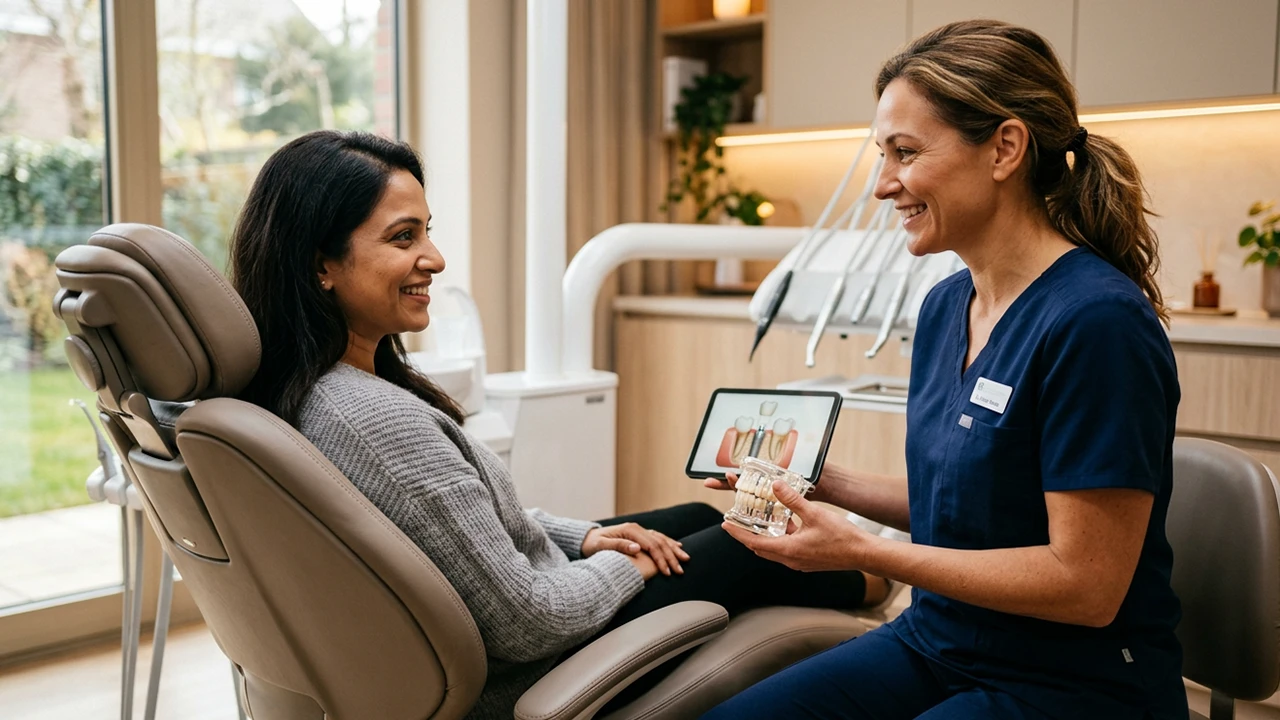
Dental implants in Turkey usually take place under local anaesthesia. This keeps the treatment area numb. You may feel pressure, movement, water, or vibration. Sharp pain should stay blocked during the procedure. After treatment, some soreness, swelling, and bruising can develop. These changes often feel strongest during the first two or three days. They then ease as healing moves forward.
At UltraDent, comfort covers the dental chair, hotel rest, meals, medicine, and your journey back to the UK. Let’s walk through each stage.
Quick answer: do dental implants hurt?
The procedure itself usually feels comfortable once the local anaesthetic works fully. The first injection can sting for a few seconds. Most later sensations feel like firm pressure.
Recovery differs for each person. One implant may bring mild tenderness. Several implants, extractions, or full-arch surgery can bring more swelling. We plan your care around the procedure and your health.
How we keep you comfortable during dental implant surgery
Local anaesthesia
Local anaesthesia for dental implants numbs the gum and the tissues around the implant site. You stay awake. You can hear the equipment and feel movement. The treated area stays numb during placement.
Before we begin, we test the area. We can add more anaesthetic when you still feel a sharp sensation. We also agree on a simple hand signal. This keeps communication clear and calm.
The numb feeling may last for several hours. During that time, choose cool or lukewarm food. Take care around your cheek, lip, and tongue. NHS guidance explains that local anaesthesia blocks pain in a chosen area while you remain conscious.
Conscious sedation
Sedation for dental implants may suit a longer procedure or strong dental anxiety. You stay responsive and feel deeply relaxed. Some people remember very little of the appointment.
Local anaesthesia still handles pain control. Sedation supports calmness. Your escort should stay with you after the visit. Driving, alcohol, major choices, and solo travel need a pause during recovery.

General anaesthesia
General anaesthesia may form part of selected complex cases. You sleep through the procedure. An anaesthesia team reviews your health, regular medicines, fasting plan, and recovery needs.
This route needs more time after surgery. Your flight plan must follow the surgeon’s and anaesthetist’s clearance.
What happens when the anaesthetic wears off?
Dental implant pain often starts as the numb feeling fades. It can feel like an ache, pressure, gum tenderness, or jaw stiffness. Stitches may feel tight. A temporary bridge can also feel new against your tongue.
Pain levels vary. A single implant often creates a lighter recovery. A full arch can involve several implant sites, tooth removal, and temporary teeth.
Regular pain relief often supports the first 48 hours. Follow our medicine plan. Your health history can change the safest choice. Guy’s and St Thomas’ NHS guidance notes that many people use regular pain relief during the first two days.
Dental implant recovery timeline: day by day
A clear dental implant recovery timeline makes the early days easier to understand.
Treatment day
The mouth may stay numb for a few hours. Light oozing can occur. Your face may feel tight. Rest at the hotel and keep your head raised.
Choose soft food once eating feels safe. Yoghurt, eggs, soup, porridge, and soft fish work well. Keep food cool or lukewarm while numbness remains.
A cold pack can support comfort. Wrap it in a clean cloth. Use short sessions based on our instructions. Guy’s and St Thomas’ advises short ice-pack use during the first six hours after implant placement.
Days two and three
Dental implant swelling often reaches its peak during this stage. Your cheek may look fuller. The jaw can feel stiff. Bruising may start to appear.
This can feel stronger after several implants or tooth removal. Leeds Teaching Hospitals states that swelling and bruising are often strongest 24 to 48 hours after implant surgery.
Keep your day calm. Eat soft meals. Drink water often. Take each medicine at the planned time.
Days four to seven
Swelling should start to settle. Bruising may change colour. Purple can turn green, yellow, or brown. Jaw movement often becomes easier.
The gum may still feel tender. Continue your cleaning routine. Use a soft toothbrush and any prescribed mouthwash as directed.
Week two
Most surface healing moves forward well by this stage. Leeds Teaching Hospitals explains that the gum often heals in one to two weeks, while bone healing takes longer.
Your stitches may dissolve or need removal. We will explain which type you have. Comfort at the gum line comes before full bone bonding. That deeper stage continues for several months.
Why swelling happens
Swelling is part of the body’s healing response. Fluid moves into the area after surgery. The amount depends on the number of implant sites, tooth removal, grafting, treatment time, and your own healing pattern.
Mild or moderate swelling that rises and then settles often fits the expected course. A steady improvement after the peak is a positive sign.
One side may look fuller when it needs more work. We compare this with pain, temperature, bleeding, and general wellbeing.
Bruising after dental implants
Bruising after dental implants comes from tiny blood vessels under the skin. The colour may sit near the cheek, chin, jawline, neck, or lower eye area. Gravity can move the colour away from the implant site.
Some people bruise very little. Others show a stronger colour change. Age, medicine, grafting, and the size of surgery can affect the look.
The colour may deepen before it fades. Rapid growth, heat, severe pain, fever, or discharge calls for a prompt clinical review.
Single implants and full-arch treatment feel different
One implant and a full arch create very different recovery needs. A single implant often affects a small area. A full arch covers a wider part of the jaw.
All-on-4 swelling and bruising can feel stronger because the treatment may include tooth removal and four implant sites in one jaw. Temporary teeth can add a new feeling across the mouth. A soft diet keeps early bite pressure gentle.
People considering All-on-4 dental implants Turkey should ask how many teeth need removal, whether grafting forms part of the plan, which temporary teeth will be fitted, and how long the clinic stay lasts.
Full-mouth dental implant recovery can involve both jaws. Rest, nutrition, medicine timing, and clinical reviews carry extra importance. A clear full mouth dental implants Turkey price should explain the surgical stages, temporary teeth, final teeth, scans, implant system, and follow-up route.
Some full mouth dental implants Turkey package deals include travel elements. Give equal attention to implant records, reviews, and the contact route.
Bone grafts and sinus lifts can change the timeline
A bone graft builds or supports the area around an implant. Bone graft recovery can bring extra swelling, bruising, and tenderness. The size and position of the graft shape the experience.
An upper back implant may sit close to the sinus. Some people need a sinus lift before or during implant placement. Sinus lift flight timing needs a personal decision because cabin pressure and sinus symptoms can affect comfort.
At UltraDent, we use scans to study bone height, bone width, and the sinus area. Some cases allow the graft and implant at one visit. Other cases work best in stages. Our own sinus-lift guidance explains that travel should follow the clinical timeline, with flight timing and early review planned before the journey home.
Flying after dental implants
Flying after dental implants can feel comfortable once bleeding is controlled, pain relief works well, hydration feels easy, and the clinical review supports travel.
A same-day flight leaves little room for an early check. Swelling can rise during the next 24 to 48 hours. A calmer plan gives our team time to review your bite, stitches, and surgical sites.
For a simple implant under local anaesthesia, the return date may come sooner. For full-arch surgery, sedation, grafting, or sinus work, a longer stay may create a smoother journey.
Can you fly after dental implants?
Yes, many people travel home after a suitable recovery window and a clinical review. Your own date depends on the size of surgery and the type of anaesthesia.
We look at swelling, bleeding, pain control, hydration, alertness, and access to care. The GDC advises UK travellers to confirm aftercare, extra travel costs, remedial care, and a clear contact route.
How to make the flight home more comfortable
Your flight home after dental implants starts with good planning at the clinic.
Before leaving, collect:
- Your medicine instructions
- Implant brand and implant record
- Scan or X-ray copies
- Treatment summary
- Emergency contact details
- UK follow-up guidance
- Fit-to-fly clearance when your case needs it
Keep medicines in your hand luggage. Bring soft food that fits your plan. Sip water during the journey. Ask for support with heavy bags. Take a gentle walk during a longer flight when you feel steady.
An aisle seat supports easy movement. A small neck pillow can support your head. Extra airport time can lower stress.
Dental implant aftercare at the hotel and at home
Good dental implant aftercare protects the healing gum and keeps the mouth fresh.
Follow these simple steps:
- Take medicines at the planned time.
- Keep meals soft and rich in protein.
- Drink water often.
- Clean the rest of the mouth gently.
- Use any mouthwash exactly as directed.
- Keep smoking and alcohol away from the healing period.
- Sleep with your head raised during the early nights.
- Keep hard, crunchy, and sticky food away from temporary teeth.
Temporary full-arch teeth need gentle chewing. Surface comfort can return before deeper bone healing finishes.
When should you contact us quickly?
Reach our team quickly when pain grows after earlier improvement. The same applies when swelling keeps rising after day three, bleeding stays heavy, or a foul taste appears.
Fever, discharge, strong one-sided sinus pain, a loose temporary bridge, or new numbness also need review. Breathing or swallowing changes need emergency care at once.
Clear photos can assist our first review. We may guide you towards local or emergency care based on the symptoms.
How UltraDent plans your comfort
Our work starts with assessment. We review your teeth, gums, bite, bone, medical history, and travel dates. 3D imaging can guide implant position and show the relationship between the jaw and sinus.
We then create a personal Solution Strategy. It can cover anaesthesia, implant number, tooth removal, grafting, temporary teeth, medicine, hotel rest, early reviews, and the flight home.
Our dental implants in Antalya options include single implants, All-on-4, All-on-6, and full-mouth work. Each route has its own pace.
Cost matters too. People comparing implant costs in Turkey gain more clarity from a full treatment breakdown. A headline dental implants Turkey cost can leave out scans, temporary teeth, grafting, final restorations, or follow-up. We explain the stages that apply to your mouth.
Quality planning also matters for wider dental surgery in Turkey. The implant system, dentist’s experience, lab work, bite design, and long-term care all shape the final journey.
Questions to ask before booking
A strong consultation should cover more than the implant fee. Ask these questions:
- Which anaesthesia fits my case?
- How many implants and extractions are planned?
- Will I need a graft or sinus lift?
- Which temporary teeth will I wear?
- How long should I stay in Antalya?
- Who will guide me after I return?
- Which records will I receive?
- Which costs sit inside the Solution Strategy?
These questions add real value when comparing dental implant clinics in Turkey.