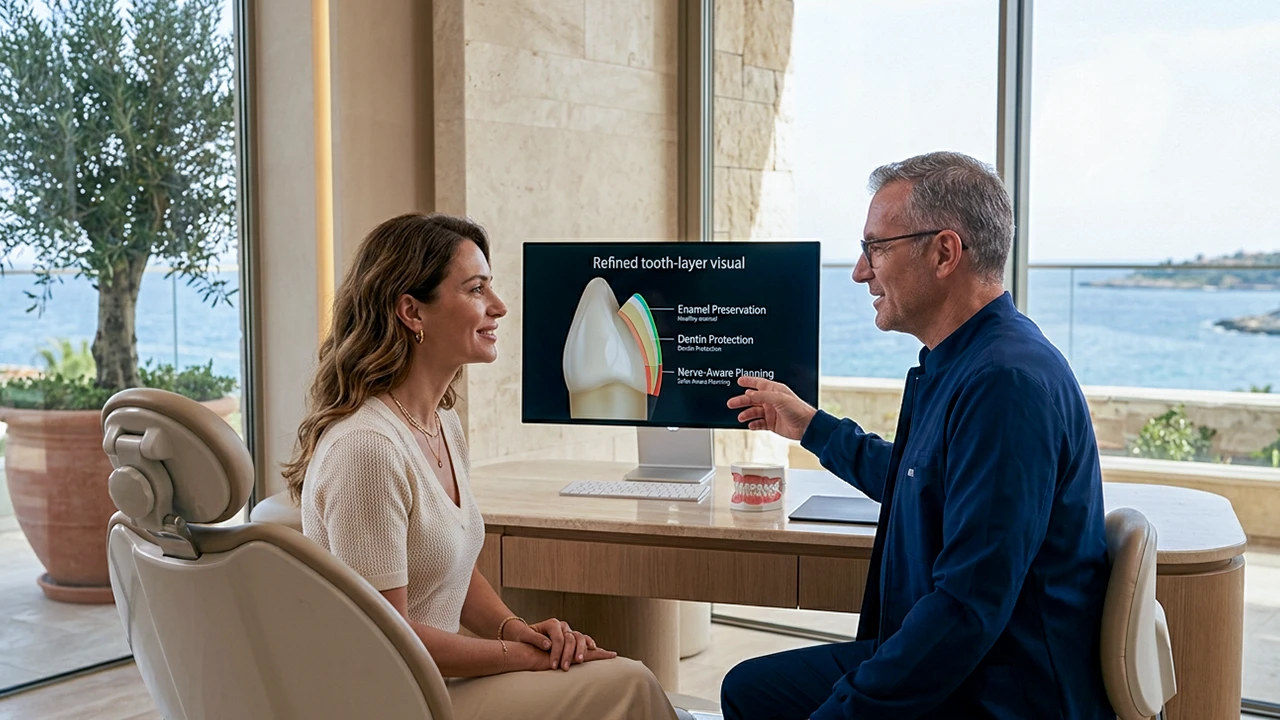
Sensitive teeth can make cold water, hot tea, sweet foods, and fresh air feel sharp. Veneers for sensitive teeth may suit selected smiles, especially where worn enamel or exposed dentine affects the front surface. Safe planning starts with one clear step: we identify the source of the sensation before shaping any tooth.
We assess enamel, dentine, gums, bite pressure, existing fillings, cracks, and pulp health. This guides a plan that protects healthy tooth structure and supports comfort after your UK return.
Can You Have Veneers for Sensitive Teeth?
Yes, selected sensitive teeth can receive veneers. The choice depends on the cause, healthy enamel, gums, bite, and pulp condition.
A veneer is a thin front-surface restoration that can change colour, shape, width, length, and texture. It may also cover a sensitive facial surface and reduce contact with cold air or drinks.
The search phrase can you get veneers with sensitive teeth needs a careful answer. Sensitivity from mild enamel wear may lead to one plan. Sensitivity from decay, a deep crack, an exposed root, or inflamed pulp calls for another route. We match the treatment to the cause.
The Quick Answer: What Makes a Case Suitable?
A suitable case has stable gums, controlled decay risk, bite balance, structure, and a sensitivity pattern.
Short, sharp sensitivity to cold can point towards exposed dentine. Lingering heat or cold, spontaneous throbbing, swelling, or strong biting pain can suggest deeper pulp involvement. The American Association of Endodontists lists lingering temperature sensitivity, chewing pain, gum spots, cracks, and swelling among signs that deserve closer pulp assessment.
Veneers and nerve pain belong to separate parts of treatment planning. Veneers reshape and cover the outer tooth surface. Pulp care addresses inflammation or infection inside the tooth.
Enamel, Dentine, and Nerves: Why Teeth Feel Sensitive
Enamel forms the outer shield
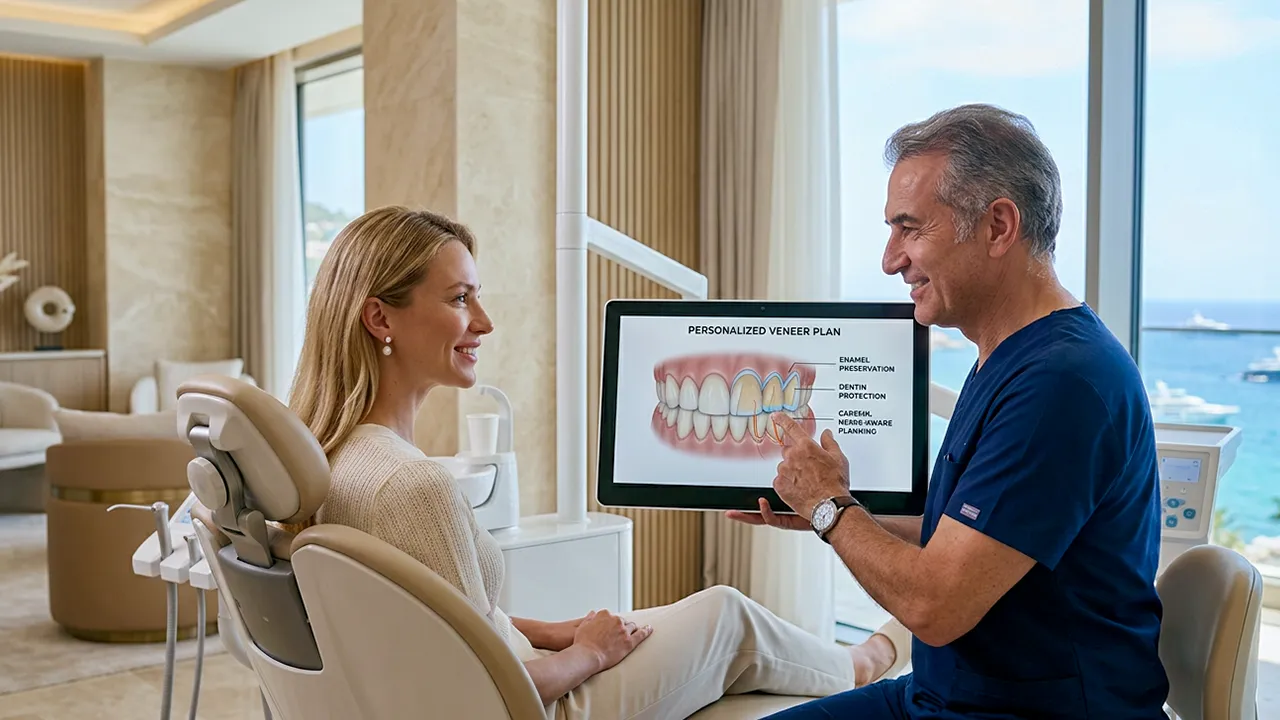
Enamel is the hard outer layer of the crown. It is mineral tissue, while nerves sit inside the pulp. It shields the softer dentine from food, drinks, brushing, and bite forces.
Once enamel becomes thin, chipped, or eroded, temperature changes reach dentine more easily. That is why thin enamel and veneers need careful planning. Healthy enamel carries value because ceramic bonding performs especially well on it.
Clinical reviews have linked enamel-bonded veneers with strong survival rates. Research also shows that extensive dentine exposure can reduce the long-term survival of bonded ceramic veneers.
Dentine carries the sensation
Dentine sits below enamel. It contains tiny channels called tubules. When these tubules become exposed, fluid movement inside them can stimulate nerve endings near the pulp. Cold, heat, air, sweetness, touch, and pressure may then create a quick, sharp response.
This explains dentin hypersensitivity and veneers. A bonded veneer may cover front-surface dentine when the seal, surrounding tissue, and diagnosis support treatment.
The pulp contains nerves and blood vessels
The pulp is the living centre, with nerves, blood vessels, and connective tissue. A healthy pulp can react briefly to a cold test. A deeply inflamed pulp may react for longer, ache spontaneously, or feel sore during chewing.
Before cosmetic work, cold tests, tapping, bite tests, X-rays, and symptom history can guide the diagnosis. Ongoing pain deserves a full dental review because decay, cracks, infection, and earlier dental work can all affect the pulp.
What Causes Sensitivity Before Veneer Treatment?
Worn enamel and acid erosion
Acidic drinks, reflux, frequent citrus intake, aggressive brushing, and long-term grinding can reduce enamel. The surface may look smooth, short, or transparent at the edges.
Veneers for worn enamel can rebuild shape and cover selected facial surfaces. We first assess why the wear started.
Gum recession and exposed roots
When gums move down, cold air, brushing, and drinks can reach root dentine.
Gum recession and veneers need close attention because a veneer may leave part of an exposed root visible. Gum care, bonding, or a soft-tissue route may suit the area more closely.
Cracks, decay, and older fillings
Cracks can create chewing pain. Decay and older fillings can also cause sensitivity.
We examine these areas before smile design and first create a stable, clean foundation.
Grinding and bite pressure
Clenching and grinding can wear enamel, chip edges, strain fillings, and make teeth sore. Bruxism and veneers need a bite-led plan. We check tooth contacts, jaw movement, and night-guard suitability.
A Detail Competitor Guides Often Skip: Whitening and Earlier Dental Work
Recent whitening can make teeth more responsive to cold. Leeds Teaching Hospitals notes that tooth sensitivity can occur during whitening and often settles after the whitening phase ends. We ask about the product, strength, schedule, and final application date before planning veneers and tooth sensitivity care.
Earlier fillings and bonding also change the bonding surface. Ceramic can bond strongly to enamel, while large resin areas need their own adhesive plan. Old restorations may need renewal before the veneer stage. Previous trauma, root canal care, or a history of repeated pain also deserves close review.
This background becomes especially useful when someone reports sensitive teeth after veneers from earlier treatment. We review preparation depth, margins, bite contacts, gum health, and the time pattern of each symptom. A short cold response carries one meaning. Heat, night pain, swelling, or strong chewing pain carries another.
For UK guests considering Turkish dental treatment, sharing old X-rays and treatment records can create a clearer starting point. Records give our team useful context, while the in-clinic examination confirms the current condition.
When Veneers May Ease Sensitivity
A veneer may reduce contact between an exposed facial surface and daily triggers. This may suit mild wear, small defects, or limited exposed dentine.
Veneers for exposed dentin work best when the exposed area sits within the planned veneer coverage. Root exposure near the gum line may require added care. A deep crack or pulp condition also needs its own clinical route.
We use careful wording here because veneers are cosmetic restorations with functional value. They can support selected sensitive surfaces. Diagnosis remains the foundation.
Can Veneers Increase Tooth Sensitivity?
Some teeth feel more cold-aware during the early stage. Temporary sensitivity after veneers can follow enamel preparation, temporary restorations, bonding, gum handling, or a small bite adjustment.
The amount of preparation matters. Veneer preparation and enamel should remain conservative wherever the case allows. A plan that stays mainly within enamel supports reliable bonding and limits dentine exposure.
Temporary materials can feel rougher and have a lighter seal. We use this stage to review shape, speech, gums, and bite.
After final bonding, the margin fit and bite still matter. Veneer bonding and sensitivity are closely linked because isolation, adhesive technique, full seating, smooth edges, and balanced pressure all shape the final feel.
What Competitor Guides Often Miss: Sensitivity Versus Pulp Pain
A short cold sensation and a deep toothache can sound similar, yet they point in separate clinical directions.
Dentine sensitivity tends to feel quick and sharp. It usually follows a clear trigger and fades soon after the trigger ends. Pulp pain may linger, throb, wake someone at night, spread across the jaw, or grow stronger with heat and biting.
This matters in discussions about pain after veneers. Early awareness can settle as the tooth and gums adapt. Lingering pain, swelling, a gum spot, strong chewing pain, or a growing ache calls for prompt assessment. These signs guide the right clinical response.
Minimal-Prep, No-Prep, and Traditional Veneers
Minimal-prep veneers
Minimal-prep veneers use controlled enamel reduction to create room for ceramic while keeping a healthy structure.
This route can support natural contours, clean margins, and strong enamel bonding. Position, colour, fillings, and shape influence the depth.
No-prep veneers
No-prep veneers for sensitive teeth may suit narrow teeth, small gaps, mild colour concerns, and favourable bite positions. Ultra Dental Turkey describes Lumineers as ultra-thin porcelain restorations designed around minimal or zero enamel alteration in selected cases.
A zero-preparation plan needs space for added ceramic. Forward-positioned teeth may look bulky with extra thickness. We choose the most conservative route that still creates natural shape, healthy gum contours, and balanced function.
Traditional preparation
Traditional veneers can suit larger colour, size, position, or shape changes, along with teeth carrying existing composite or older veneers.
Tooth preparation for veneers should follow a measured design rather than a single depth across every smile. A preparation guide and mock-up can support this precision. Each tooth differs.
Which Veneer Material Suits Sensitive Teeth?
Porcelain, lithium disilicate, and composite can all play a role. Tooth condition, enamel, colour, bite, thickness, and maintenance guide the choice.
Porcelain veneers for sensitive teeth can create a smooth, stain-resistant surface with natural light reflection. Strong bonding still depends on the preparation and tooth surface beneath the ceramic.
E-max veneers for sensitive teeth use lithium disilicate ceramic. This material can combine strength with natural translucency. Comfort depends on the full plan. Preparation depth, bonding, fit, and bite carry equal weight.
Composite veneers use direct resin and can suit smaller changes or conservative repairs. They may need added polishing over time.
Our Safe Smile Planning Process
1. Remote starting review
Before travel, we invite smile photos, symptom details, and recent dental records where available. We ask what triggers the sensitivity, how long it lasts, and whether biting creates discomfort.
This early review guides the first dental treatment in Turkey conversation and outlines possible routes before examination.
2. Full clinical assessment in Antalya
At our dental clinic in Antalya, we examine teeth, gums, restorations, bite, cracks, wear, and root exposure. X-rays and sensibility tests may form part of the assessment.
A Turkey dentist should understand both the cosmetic goal and the health of every planned tooth. We build the smile around that full picture.
3. Digital design and mock-up
Digital Smile Design shows shape, length, balance, and shade. A mock-up can test speech, lip movement, and added volume.
We can then refine the design before preparation.
4. Conservative preparation and temporary veneers
We prepare each tooth from its own starting point, preserving enamel while creating space for a natural restoration.
Temporary veneers protect the prepared surfaces and introduce the planned form. We review comfort, cleaning, speech, and bite during this stage.
5. Final bonding and bite refinement
We check colour, fit, contacts, and gum margins. After controlled bonding, we remove excess cement, polish the edges, and refine the bite.
6. UK return plan
For UK guests choosing veneers in Turkey, aftercare needs equal attention. We create a treatment summary, material details, care guidance, review timing, and direct contact route.
The travel plan leaves room for final checks and small refinements before the flight home.
When Another Route Fits the Tooth Better
Some teeth respond well to sensitivity toothpaste, fluoride care, composite repair, periodontal care, or crown coverage.
Pulp inflammation or infection can require endodontic care before cosmetic work. Root canal treatment follows a confirmed diagnosis and cares for a tooth from within.
We select the route that respects the tooth first and the smile goal second.
Cost, Lifespan, and Daily Care
The cost of dental veneers covers more than ceramic. The final amount can reflect the number of teeth, material, laboratory work, temporary veneers, existing fillings, gum care, bite management, and aftercare.
Guests comparing veneers in Antalya should review records, diagnostics, temporary stages, final checks, and contact after travel.
So, how long do veneers last? Ceramic veneers often achieve strong long-term survival, and reviews report survival above 90% beyond ten years across many studies. Daily hygiene, enamel bonding, grinding control, bite balance, gum health, and regular reviews shape each result.
Brush twice daily, clean between the teeth, attend UK reviews, wear a night guard when advised, and keep veneers away from packaging or very hard objects over time.