
A veneer fell off after your flight home, and your first feeling may be panic. Stay calm. You have clear options. A chipped, loose, or detached veneer often has a clear repair route once a dentist checks the restoration and the tooth beneath it.
At UltraDent, we guide international guests through the next steps after dental treatment in Turkey. The right action depends on what happened. A small edge chip needs a different approach from a veneer that moves or comes away fully.
Let’s look at what to do first, when UK urgent care matters, and how repair or replacement works.
What to Do First When a Veneer Fell Off in the UK
Your first actions can protect the tooth and preserve the veneer. Follow these steps.
Keep the Veneer Safe
When the veneer came off, remove it from your mouth and hold it by the outer surface. Rinse it gently with clean water. Place it in a clean, rigid container with a lid.
Avoid scrubbing the inner surface. That surface carries details that may matter during a clinical review. Bring it to your dental appointment, even when it looks cracked.
Protect the Exposed Tooth
Chew on the other side of your mouth. Choose soft foods such as yoghurt, eggs, soup, pasta, or soft rice. Very hot, cold, sticky, crunchy, and hard foods can increase sensitivity or place pressure on the tooth.
Brush the area gently with a soft toothbrush. A toothpaste made for sensitive teeth may ease tooth sensitivity after veneer detachment. Keep the gumline clean, since plaque can gather around the exposed edge.
Contact UltraDent and a UK Dentist
Send us clear photos of your smile, the affected tooth, and the veneer. Add your treatment date, current symptoms, and a short account of what happened. Your treatment plan, invoice, scan, X-ray, material record, and guarantee document can also support our review.
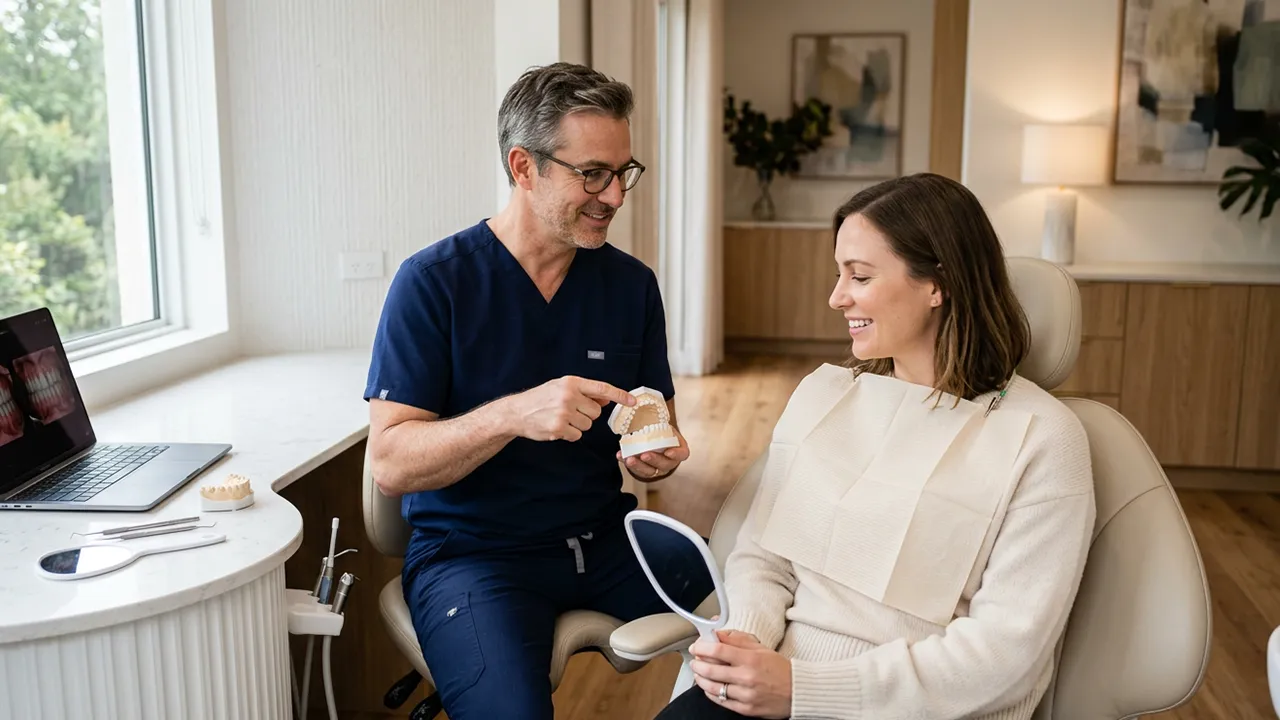
A local dentist can examine the tooth in person. This matters when pain, swelling, bleeding, trauma, or a changed bite appears. A clinical examination creates a clear route forward.
Skip Household Glue
Household glue can irritate oral tissues and contaminate the bonding surface. Dental bonding uses controlled moisture, surface preparation, suitable cement, precise placement, and a final bite check.
A shop-bought temporary fix for a loose veneer may cover a sharp edge briefly. Professional bonding still requires a dentist. Keep temporary material away from the gum and arrange an appointment quickly.
Is a Loose Veneer an Urgent Dental Concern?
A loose veneer deserves prompt dental advice. NHS guidance in England includes a broken veneer or loose veneeramong reasons to request urgent dental care or contact NHS 111. The appointment timing depends on symptoms and clinical need.
Seek urgent care when you notice:
- Moderate or strong pain
- Swelling inside the mouth or face
- Bleeding around the tooth
- Increasing sensitivity
- A sharp edge cutting your tongue or cheek
- A veneer moving while you eat or speak
- A recent fall, impact, or sports injury
- A bite that suddenly feels high or uneven
- A bad taste, discharge, or fever
Call 999 or attend A&E for severe facial or jaw injury, heavy bleeding that continues, or swelling that affects breathing. These signs need immediate medical attention.
Across Scotland, Wales, and Northern Ireland, use your local NHS urgent dental route or regular practice.
Why Can a Veneer Chip or Come Loose?
A veneer can remain strong for many years. It still faces daily pressure from chewing, grinding, food, and changes in the mouth. Several factors can lead to a chipped veneer or loss of bonding.
Bite Pressure and Teeth Grinding
Grinding and clenching place repeated force on ceramic edges. This force may create a small crack or weaken the bond over time. Research links bruxism with higher fracture and debonding risk for porcelain laminate veneers.
A custom night guard can protect restorations when your dentist finds signs of grinding. The fit matters. A poorly fitting guard may change how your teeth meet.
Hard Foods and Daily Habits
Ice, hard sweets, popcorn kernels, bones, and hard crusts can place a sharp force on a veneer. Nail biting and chewing pens create similar pressure. Opening packets or bottle tops with your teeth also raises the chance of damage.
Cut firm foods into smaller pieces. Use the back teeth for chewing. These simple habits support long-term veneers aftercare.
Bonding and Enamel Support
Veneers bond most predictably to healthy enamel. The amount of enamel, moisture control, surface preparation, cement choice, and placement technique all influence the result. A bond may become less secure when one or more of these factors changes.
Decay near the edge can also weaken support. Gum changes may expose a margin and allow plaque to collect. The dentist needs to assess the full area before rebonding. Clinical research identifies preserved enamel as an important factor in long-term veneer survival.
Trauma or a Sudden Impact
A fall, sports injury, or accidental knock can damage ceramic and natural teeth. Even a small mark may hide a deeper crack. An X-ray and bite assessment may follow an impact.
The Age and Material of the Veneer
Ceramic materials have different strengths and repair options. Porcelain often keeps its colour and surface well. Composite resin is easier to repair directly and may wear faster.
Clinical reviews report strong long-term survival for ceramic veneers, often above 90% at ten years. Fracture and debonding remain recognised complications. Your own result depends on the material, tooth preparation, bite, oral care, and daily habits.
What Happens to the Tooth Underneath?
The tooth may look smaller, duller, rougher, or more yellow once the veneer comes away. Its appearance depends on the preparation used during treatment. Some veneer cases involve minimal shaping, while others involve more reduction.
Air, cold drinks, and touch may create sensitivity. This feeling often relates to exposed enamel or dentine. A dentist can check for decay, cracks, gum irritation, and nerve symptoms.
Early assessment supports the tooth and keeps more treatment routes open. The dentist may place a protective material while a permanent plan is arranged.
Can a UK Dentist Repair Veneers Fitted in Turkey?
Yes, many UK dentists can assess overseas dental work. Each dentist makes a clinical decision based on the tooth, restoration, records, material, bite, and treatment required.
A dentist for Turkey teeth in the UK may begin with an examination, photos, X-rays, and bite checks. The dentist will also confirm whether you have a veneer or a crown. This difference matters because each restoration covers the tooth in a different way.
A veneer mainly covers the front surface. A crown surrounds most of the visible tooth. The phrase turkey teeth can describe either treatment in online conversations, so your written records give a clearer answer.
Some practices specialise in Turkey teeth repair UK cases. Others may guide you towards a restorative dentist or prosthodontist when the case involves several teeth, bite changes, decay, or complex shade matching.
Can a Veneer Be Reattached?
An intact veneer may be suitable for rebonding. The dentist checks its fit, inner surface, edges, shade, and strength. The tooth also needs assessment for enamel support, decay, cracks, and sensitivity.
Professional rebonding usually includes cleaning, controlled surface treatment, dental adhesive, precise seating, removal of excess cement, and a bite check. Reusing the veneer depends on its condition and compatibility with the bonding process.
A repeated detachment may point to a bite issue, limited enamel, contamination, fit concerns, or pressure from grinding. In that situation, a fresh treatment strategy may create a more stable result.
Can a Chipped Veneer Be Repaired?
The size and position of the chip guide the decision. A tiny rough edge may be smoothed and polished. A small visible chip may accept composite resin as a conservative porcelain veneer repair.
Composite can improve shape and comfort. Its shade, surface, and wear pattern differ from ceramic. Larger fractures often need a replacement veneer for a stronger and more natural-looking finish. Research into intraoral ceramic repair confirms that material type, surface treatment, and bonding technique influence repair strength.
The dentist may recommend replacement for a deep crack, poor fit, recurrent movement, decay, or major colour mismatch. A scan or impression then captures the tooth and surrounding smile.
Repair in the UK or Return to Your Turkey Dentist?
Both routes can work. The choice depends on urgency, complexity, travel, records, guarantee terms, and the number of affected teeth.
UK care often suits urgent assessment, pain relief, temporary protection, rebonding, or a small repair. It also keeps treatment close to home. Search terms such as veneer repair UK and emergency veneer repair often lead to private clinics with same-day appointment options.
Returning to your Turkey dentist may suit planned remedial care involving several connected veneers. It can also support complex shade matching, access to original scans, and work with the original laboratory.
Before booking a flight, request a local examination and share the findings with our team. Compare the full journey. Include consultations, scans, temporary care, laboratory work, travel, accommodation, time away from work, and future follow-up.
The General Dental Council encourages people planning overseas care to understand guarantee terms, aftercare, extra travel costs, remedial treatment, complaint routes, and the clinic contact process. Keeping written records makes these conversations clearer.
How UltraDent Reviews Your Veneer Aftercare Case
At UltraDent, we combine clinical review with access to our dental laboratory. Our laboratory was established in 1999 and includes more than 90 dental technicians. This structure supports communication between the clinical and technical teams.
Here is how our review usually begins:
- Share clear images. Send front, side, close-up, and bite photos.
- Describe the change. Tell us when movement, chipping, sensitivity, or detachment began.
- Send your records. Include your treatment plan, material details, guarantee document, and any UK dental report.
- Arrange local care where needed. Pain, swelling, trauma, or infection signs deserve prompt UK assessment.
- Review the next step. We assess the available details and guide you towards local care, remote planning, or a clinic visit.
Your written dental veneer guarantee sets out the terms linked to your treatment. Coverage depends on the document, restoration condition, clinical findings, cause of damage, and care history. Third-party treatment may also affect the review, so share the situation with us before elective changes where time allows.
What Does Veneer Repair Cost in the UK?
The fee varies by city, clinic, urgency, and treatment type. An examination and X-ray carry a different fee from polishing, composite repair, rebonding, or full replacement. Laboratory work and shade matching can raise the total.
Ask for a written estimate after the examination. The estimate should state what the fee covers. It may include temporary protection, scans, laboratory stages, fitting, and follow-up.
A low headline price gives only part of the picture. Focus on the diagnosis, material, clinician’s experience, expected stages, and aftercare route.
How to Reduce the Chance of Another Veneer Problem
Good daily care protects the veneer, gum, and natural tooth.
- Brush twice a day with a soft toothbrush and fluoride toothpaste.
- Clean between the teeth each day.
- Attend routine dental examinations and hygiene visits.
- Wear a custom night guard when your dentist advises one.
- Avoid biting ice, hard sweets, pens, nails, and packaging.
- Cut firm foods into smaller pieces.
- Use a mouthguard for contact sports.
- Keep scans, X-rays, invoices, and material records in a digital folder.
- Report movement, sensitivity, roughness, or bite changes early.
People often wonder how long do veneers last. UltraDent’s current veneer guidance lists general estimates of up to 15 years for zirconium, 10 to 15 years for porcelain, and up to 10 years for laminate veneers with suitable care. These figures are broad guides. Your oral health, bite, material, and habits shape the final lifespan.
Our veneers in Antalya treatment process includes assessment, material selection, impressions or scans, laboratory creation, temporary protection where needed, fitting, and bite review. The full process commonly takes five to seven days, depending on the tooth and veneer type.