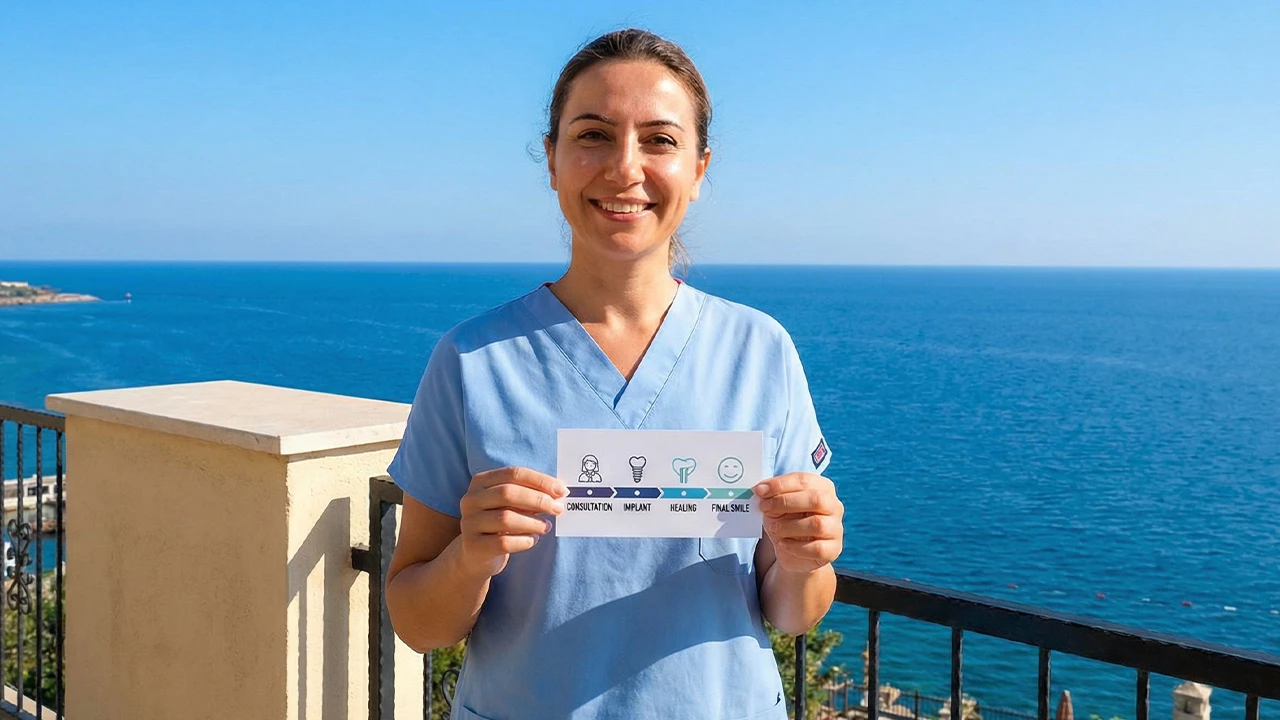
When UK patients plan dental implants in Turkey, the timeline usually follows a staged path built around healing and long-term stability. Most schedules include two trips:
- One: for scans and implant placement
- Two: a later visit for final crowns or bridges after healing.
Your schedule depends on implant number, your gum health, bone levels, and whether temporary teeth suit your case.
Quick Answer Checklist
Read this first before you book flights:
- Expect two stages: a surgery trip, then a final teeth trip after healing
- Plan around 5–10 days for visit one, and around 5–7 days for visit two
- Healing often takes a few months before final crowns or bridges
- Timelines can extend with extractions, bone needs, and full-arch work
- Aftercare planning for your UK return keeps the journey smooth
Typical Timeline For Dental Implants In Turkey
Implants perform best with a phased plan. The implant needs time to integrate with the jaw, and the final crown or bridge needs careful bite adjustment. That’s why many timelines include one trip for surgery and a later trip for the final teeth.
Stage 1: assessment and planning (first 1–2 days)
The first few appointments focus on clear planning. Most clinics do a full exam, imaging (often CBCT), and bite checks. A written plan then confirms:
- how many implants you need
- which teeth stay and which teeth are removed
- whether a temporary tooth suits your case
- timing for the final crown or bridge
This stage makes the rest of the journey predictable, especially for UK travel planning.
Stage 2: implant placement (usually during visit one)
Surgery is booked after diagnostics. Many patients complete implant placement during the first trip, then attend follow-up checks before traveling home. Comfort planning forms part of the day, and a clinic should share clear steps for the first few days after surgery.
Visit One: How Long Should You Stay In Turkey?
Most UK patients plan a schedule that includes time for early checks after surgery, rather than flying straight back too soon.
What happens during the first trip
- Day 1: exam, imaging, and plan confirmation
- Day 2–4: surgery and early recovery checks (timing varies)
- Remaining days: follow-up review, cleaning guidance, travel readiness
Typical stay length
A common stay range is 5–10 days. The total depends on:
- number of implants
- extractions done at the same time
- swelling and comfort
- clinic review timing
A clinic that shares a written schedule early makes flight planning much easier.

Healing Phase: What Happens Back In The UK
The healing phase is where implants gain long-term strength. This stage happens at home, and it is a key reason many plans use two trips.
First 72 hours
Swelling, tenderness, and a tight feel can happen. Many patients feel more comfortable with rest, soft foods, and a clear home-care routine.
Weeks 1–2
Soft tissue settles. Many people feel more normal day to day while staying gentle with cleaning and food choices that support healing.
Months 2–6
Bone bonding continues. The timing can vary by jaw, bone quality, and individual healing. A strong clinic confirms readiness for the final crown or bridge based on how healing is progressing, rather than a fixed date alone.
Visit Two: Final Crown Or Bridge Fitting
The second trip is often focused and efficient. The goal is to capture final scans, confirm bite, and fit the final restoration.
What happens during the final stage
- digital scan or impressions
- shade choice and smile details
- fitting and bite refinement
- cleaning guidance for long-term care
Typical stay length
Many patients plan 5–7 days for this stage. Timing depends on lab workflow and how many teeth are being fitted.
When Timelines Get Longer (And Why That Can Be A Good Thing)
A longer timeline often reflects careful planning and safer steps. These are common reasons schedules extend.
Extractions and site healing
When teeth are removed, the area may need time to settle before placement or final fitting, depending on the plan.
Bone and sinus-related planning
Some cases benefit from staged bone care or sinus lift planning. When scans show limited bone, pacing the steps can support a stronger long-term outcome.
Gum health and bite forces
Healthy gums and balanced bite forces support better healing. When grinding is part of your history, a night guard plan often supports long-term protection.
Full-Arch Cases: Where All-on-4 Fits Into The Timeline
Some UK patients explore full-arch care and compare all-on-4 dental implants in Turkey. These cases can feel quicker at the start since temporary fixed teeth may be fitted soon after surgery when implant stability supports it. Final teeth still come later after healing and bonding, and that stage is where comfort, bite balance, and long-term fit are refined.
How Costs And Timelines Connect
Timelines and totals link because each stage includes different work. A strong quote reflects the full pathway rather than one headline figure.
A reliable plan often clarifies:
- imaging and diagnostics
- implant system details and traceability
- temporary teeth pathway when clinically suitable
- final crown or bridge materials
- review timing and aftercare structure
This is why phrases like dental implants Turkey cost and implant costs in Turkey vary: inclusions, stages, materials, and case complexity change from one patient to the next.
Some clinics also bundle planning and coordination as Turkey dental packages. The most useful package includes a written inclusions list plus a staged timeline that supports travel planning.
A Practical UK Planning Checklist
Before you book dates, ask for these details in writing:
- the staged timeline and how many visits are expected
- what happens on day one, including imaging, exam, and bite checks
- whether temporary teeth fit your pathway
- what aftercare looks like once you return home
- what is included in your quote and what sits outside it
This approach keeps travel timing realistic and supports a smoother journey from start to finish.