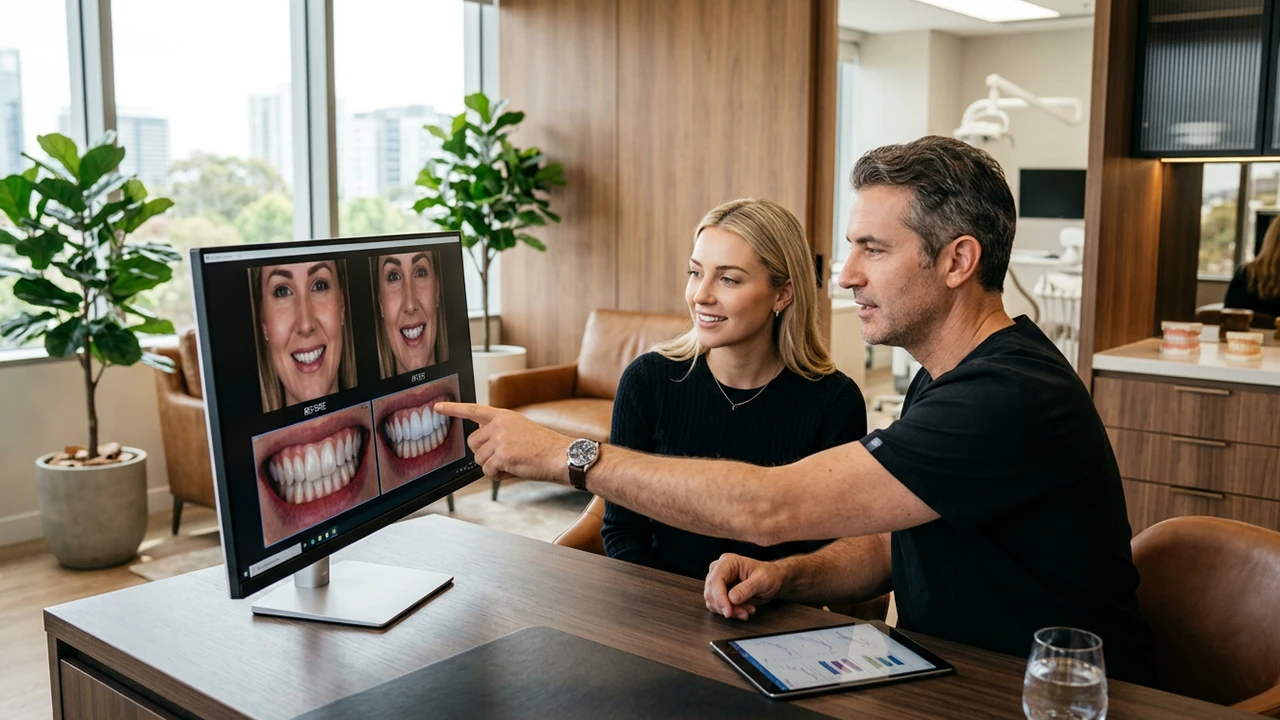
A front tooth implant in Turkey can restore far more than a visible gap. It can bring balance back to your smile, support clear speech, and make daily eating feel natural again. At UltraDent, we plan each front tooth with close attention to facial shape, gum level, tooth colour, and bite. Every detail matters because the front teeth sit at the centre of your smile.
We welcome many UK guests who want a clear plan, skilled care, and a natural result. Our approach starts with careful assessment. We study the bone, gum tissue, nearby teeth, lip movement, and smile line. We then create a treatment path that fits your needs and travel plans.
This guide explains how we plan the implant, shape the gum line, match the crown shade, and manage each healing stage.
What Is a Front Tooth Implant?
A front tooth implant replaces a missing incisor or canine. It has three main parts. The implant sits in the jawbone. The abutment connects the implant to the crown. The crown forms the visible tooth.
The implant acts like an artificial root. As healing moves forward, the bone grows around its surface. This process is called osseointegration. Once the implant reaches a stable stage, we fit the final crown.
A front implant stands on its own, so nearby teeth can keep their natural structure.
Many people compare single tooth implant Turkey options because the treatment can restore one missing tooth without changing the full smile. Our focus stays on harmony. We aim for a crown that fits the face, follows the gum line, and blends with the nearby teeth.

Why a Front Tooth Implant in Turkey Needs Detailed Planning
A front tooth supports biting and shapes the smile. Tiny changes in implant height, depth, or angle can affect the crown and gum tissue.
Digital Scans and Smile Records
Our planning may include:
- A clinical examination.
- A CBCT scan.
- Digital impressions.
- Smile photographs.
- Bite checks.
- Gum health checks.
- A review of the nearby teeth.
- A medical history review.
The scan shows bone height and width. Digital records capture the teeth, gums, bite, and lip movement. They also guide our dentist, surgeon, and dental laboratory.
Bone Shape and Gum Thickness
The facial bone around an upper front tooth can be thin and may lose volume after tooth loss. We assess this bone, the gum thickness, and the papillae between the teeth. Some cases need bone or soft tissue grafting to create a stronger base.
Implant Position and Bite
The implant angle affects the crown shape. It also affects where the screw channel sits. We aim for a position that supports a natural crown and keeps the bite balanced.
We also check how the upper and lower teeth meet. A strong bite on a healing implant can place extra force on the area. Our temporary crown plan protects the implant during this stage.
How We Shape the Gum Line
The gum line frames the crown. A natural result needs good tissue height, smooth curves, and balanced papillae.
Careful planning of the gum line around a dental implant starts before surgery. We map the tissue height, crown contour, and contact points together. This gives the gum a clear shape to follow through each stage of healing and final crown fitting.
Gum Height and Smile Balance
We compare the implant site with the matching tooth on the other side. We look at gum height, tooth length, lip movement, and the full smile line.
Our aim is balance across the full smile.
Papillae and Dark Spaces
The papillae fill the spaces between teeth. Their shape depends on bone support, tooth contact points, implant spacing, and gum health.
A gap can create a dark triangle. Careful implant position and crown design reduce this risk. Existing bone levels also shape the likely result.
Temporary Crown and Emergence Profile
The emergence profile is the shape of the crown as it rises from the gum. This area has a strong effect on tissue form.
A well-shaped temporary crown can guide the gum as it heals. We may adjust its contour in small stages, giving the tissue room to settle and mature.
This stage is a key part of aesthetic zone dental implant care. The temporary tooth does more than fill the gap. It guides the tissue toward the final crown shape.
Bone and Soft Tissue Grafts
A graft can support the front contour before, during, or after implant placement. Timing follows the defect size, tissue thickness, bone level, and implant stability. This step can extend the plan and strengthen the aesthetic base.
How We Match the Crown Shade
A front tooth carries light areas, clear edges, colour changes, and fine surface lines. One shade number tells only part of the story.
Colour, Light, and Surface Detail
We assess:
- Lightness.
- Colour depth.
- Warm or cool tone.
- Edge translucency.
- Surface texture.
- Natural lines.
- Gloss.
- Shape and width.
Shade tabs, digital tools, and clinical photos guide our laboratory. We also study how nearby teeth reflect light from several angles.
We also create a digital view of the planned tooth. This supports implant crown shade matching and lets us compare length, width, edge position, and smile balance. The image acts as a guide rather than a final promise, since gum healing shapes the final result. Our clinical records keep every stage connected.
Crown and Abutment Materials
Material choice follows the case. Zirconia brings strength and can mask darker areas. Lithium disilicate creates natural translucency in suitable cases. Layered ceramic adds fine colour detail. A customised abutment can also support crown shape and gum appearance.
People often search for dental crowns Turkey while comparing materials. The best choice comes from the full design, rather than one material name. We consider bite, crown thickness, implant angle, gum thickness, and the colour of nearby teeth.
Timing the Shade Check
Natural teeth can look lighter when they dry. We record shade early, while the nearby teeth keep their normal moisture.
When whitening forms part of the smile plan, we complete it before the final shade stage. This allows the natural tooth colour to settle before the crown is made.
At the trial stage, we check shade, shape, texture, speech, and bite in different light. We then refine the crown before final fitting.
Front Tooth Implant Healing Timeline
Healing follows the body. Each case has its own pace. Bone quality, gum health, grafting, smoking, bite force, and implant stability can affect the timeline.
Stage 1: Online Review and Planning
Before your trip, we can review photos, recent X-rays, dental history, and your goals. Your final plan follows an in-person examination and scan. We then explain the stages and visit schedule.
Stage 2: First Visit in Antalya
Your first visit may include:
- Examination and CBCT imaging.
- Digital scans and photographs.
- Review of the treatment strategy.
- Tooth removal where needed.
- Implant placement.
- Bone or gum grafting where needed.
- Temporary tooth placement.
- Aftercare guidance.
Some guests can have the tooth removed and the implant placed during the same visit. Other cases gain more control through a staged route.
Stage 3: The First Three Days
Mild swelling, tenderness, and bruising can occur, then ease over the early days. We guide you on food, cleaning, medicine, and rest. Soft meals and gentle oral care support comfort. A break from smoking and alcohol supports healing.
Stage 4: The First Two Weeks
The gum edges begin to close. Stitches may dissolve or need removal. We check the temporary tooth, bite, and gum contour.
Stage 5: Weeks Two to Eight
The surface gum can look settled while bone integration continues. We protect the area from heavy biting and may refine the temporary crown as the gum develops.
Stage 6: Months Three to Six
Many front implants reach the final crown stage after several months. We assess stability, gum health, and bone response. Grafted areas may need more time.
Stage 7: Final Crown Visit
At the final visit, we may complete:
- Implant stability checks.
- Gum line review.
- Digital scanning.
- Final shade records.
- Crown trial.
- Bite adjustment.
- Final fitting.
- Cleaning guidance.
- Implant record handover.
The gum can keep maturing after the final crown is fitted, so follow-up reviews remain valuable.
Immediate Implant or Staged Treatment?
An immediate implant enters the socket on the day of tooth removal. A same-day temporary crown is a separate clinical choice.
An immediate route may suit a clean socket, strong bone support, healthy gum tissue, and good implant stability. A staged route can suit sites with infection, bone loss, thin tissue, or a larger grafting need.
Both routes aim for a stable implant, balanced gum line, and natural crown.
The phrase immediate front tooth implant can sound like the full treatment ends in one day. In most cases, the first-day tooth is temporary. The final crown comes after the implant and gum have matured.
What Temporary Tooth Can You Wear?
A visible gap can receive a temporary tooth chosen around implant stability, bite, gum goals, and nearby teeth.
Options may include:
- A temporary crown attached to the implant.
- A resin-bonded temporary tooth.
- A clear retainer with a tooth inside.
- A small removable temporary tooth.
An implant temporary can shape the gum and needs protection from direct biting. We guide eating during this phase.
A search for temporary crown after implant often centres on appearance. Comfort and tissue shaping matter as well. We design the temporary tooth to support all three.
What Affects Front Tooth Implant Cost?
The total cost follows the full treatment plan. The implant fixture forms one part of the process.
The fee can reflect:
- Implant brand.
- CBCT imaging.
- Tooth removal.
- Bone grafting.
- Soft tissue grafting.
- Temporary tooth design.
- Abutment choice.
- Crown material.
- Laboratory work.
- Number of visits.
- Sedation.
- Follow-up care.
People comparing front tooth implant cost Turkey or implant costs in Turkey gain more clarity from an itemised plan. We explain each stage and the role it plays.
A full assessment gives a clearer view of clinical needs, travel dates, and crown design.
Planning Your Trip From the UK
We guide UK guests before arrival, during treatment, and after the return journey.
Before booking, we suggest checking:
- Dentist and surgeon details.
- Clinic registration.
- Implant brand.
- Crown material.
- Temporary tooth plan.
- Number of visits.
- Expected healing period.
- Graft needs.
- Written fee details.
- Follow-up pathway.
- Emergency contact route.
- Travel cover terms.
Your records may include X-rays, scan files, implant details, surgery notes, crown details, medicine records, and aftercare guidance.
People comparing dental implants in Antalya often focus on flights and hotel dates. Clinical timing deserves the same care. We build the travel plan around healing and review stages.
Risks and Long-Term Care
Clinical risks can include integration concerns, gum recession, tissue loss, colour mismatch, screw movement, ceramic wear, or gum inflammation.
Early review supports fast action when the area changes. Contact the clinic when swelling rises after it had started to ease, the temporary tooth feels loose, the gum level changes, or biting becomes painful.
Long-term care includes:
- Brushing twice each day.
- Cleaning between the teeth.
- Cleaning around the implant crown.
- Regular dental reviews.
- Gum and bone checks.
- Smoking avoidance.
- Bite monitoring.
- A night guard where grinding is present.
The implant and crown have different care needs. A crown can need repair or renewal at a later stage while the implant remains stable.
Why Choose UltraDent for Your Front Tooth Implant?
At UltraDent, we bring surgical planning, smile design, and laboratory detail together. The implant, gum, abutment, crown, bite, and face form one result.
Our clinic in Antalya welcomes guests from the UK and many other countries. We use digital scans, three-dimensional imaging, detailed photography, and close laboratory work. This creates a clear path from the first review to the final crown.
We value clear timelines. Each healing stage has a purpose, and we guide you through it.